What Does a First Period Look Like?
A first period is usually a small reddish-brown stain rather than a sudden gush, and it is often lighter and shorter than the periods that follow.
Published 27 July 2026
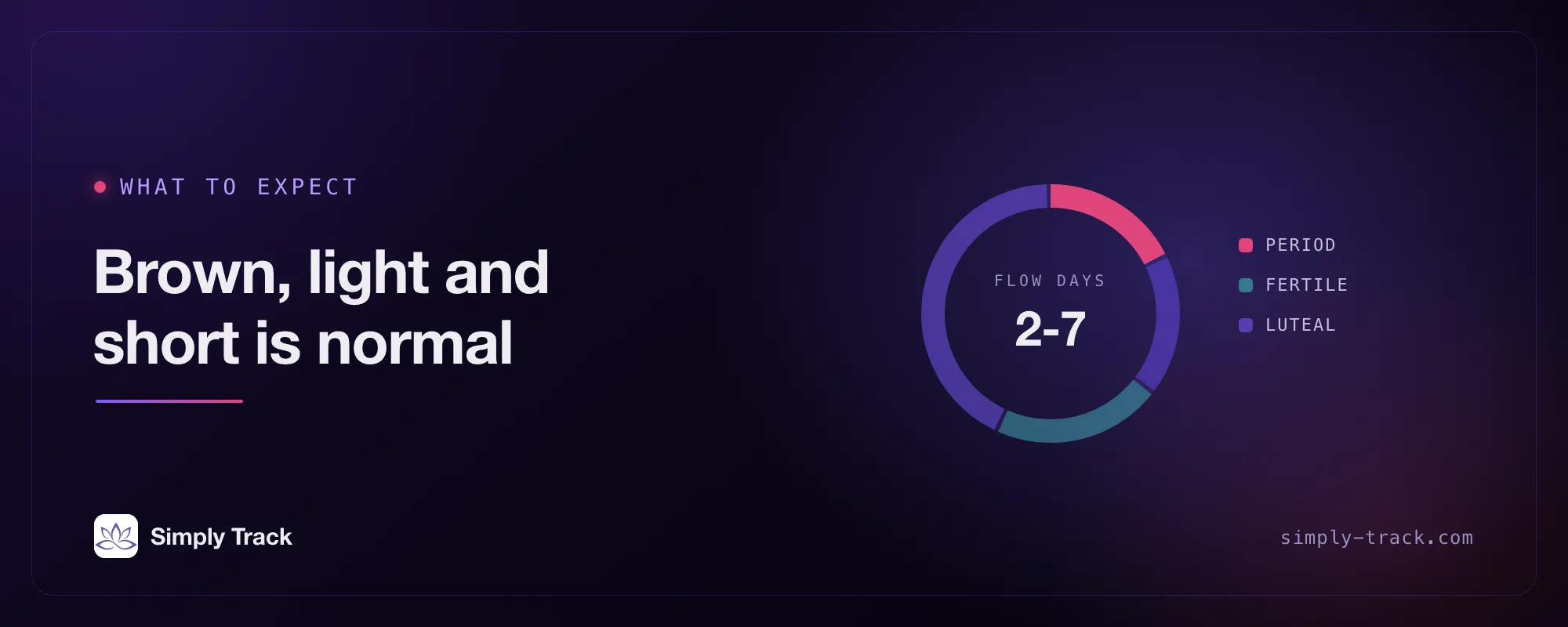
A first period is usually a small reddish-brown stain rather than a sudden gush of blood. It tends to be lighter than a regular period. The colour, amount and length vary from person to person.
None of that means something is wrong. Every first period is a little different. There is a wide range of normal to compare against, not just one script everybody follows. Here is what to expect: the colour, the amount, how long it lasts, and when it is worth mentioning to a GP.
The colour: often brown, not bright red
A first period is usually reddish-brown or dark red rather than the bright red often shown in pictures, and that is completely normal. NHS guidance describes a first period as typically a reddish-brown stain on your pants or sheets, not a sudden gush.
Colour changes through any period, too. Blood tends to look truest red on the heaviest days. It can look pink or brown when the flow is lighter. This is exactly the pattern a first period usually follows, since it is often light throughout. On its own, no single colour is a sign that something is wrong. For some people, a first period starts as light spotting rather than a full stain. That is just as normal as a heavier first day.
The colour can keep you wondering, cycle after cycle. Period Blood: Colour, Clots and Smell Explained goes into more detail on what different shades and any clots can mean.
The amount: usually less than it looks
Across a full period, NHS guidance puts total blood loss at about 20 to 90ml, roughly 1 to 5 tablespoons, and the first few periods are usually lighter still. That is a small amount spread over several days. A stain can look larger on pants or sheets than the actual amount of blood involved.
A first period also often does not last very long. This is because it can take the body some months to settle into a regular rhythm. Together, this usually means less blood overall in the first few periods than in a settled cycle later on. It can help to remember that the numbers describe a whole period added together, not a single change of pad or tampon.
How long it lasts, and why the timing is unpredictable at first
A period usually lasts 2 to 7 days once things settle, but a first period is often shorter, and the gap before the next one is unpredictable for a while. NHS guidance says that once periods are settled, expect one every 23 to 35 days, lasting 2 to 7 days.
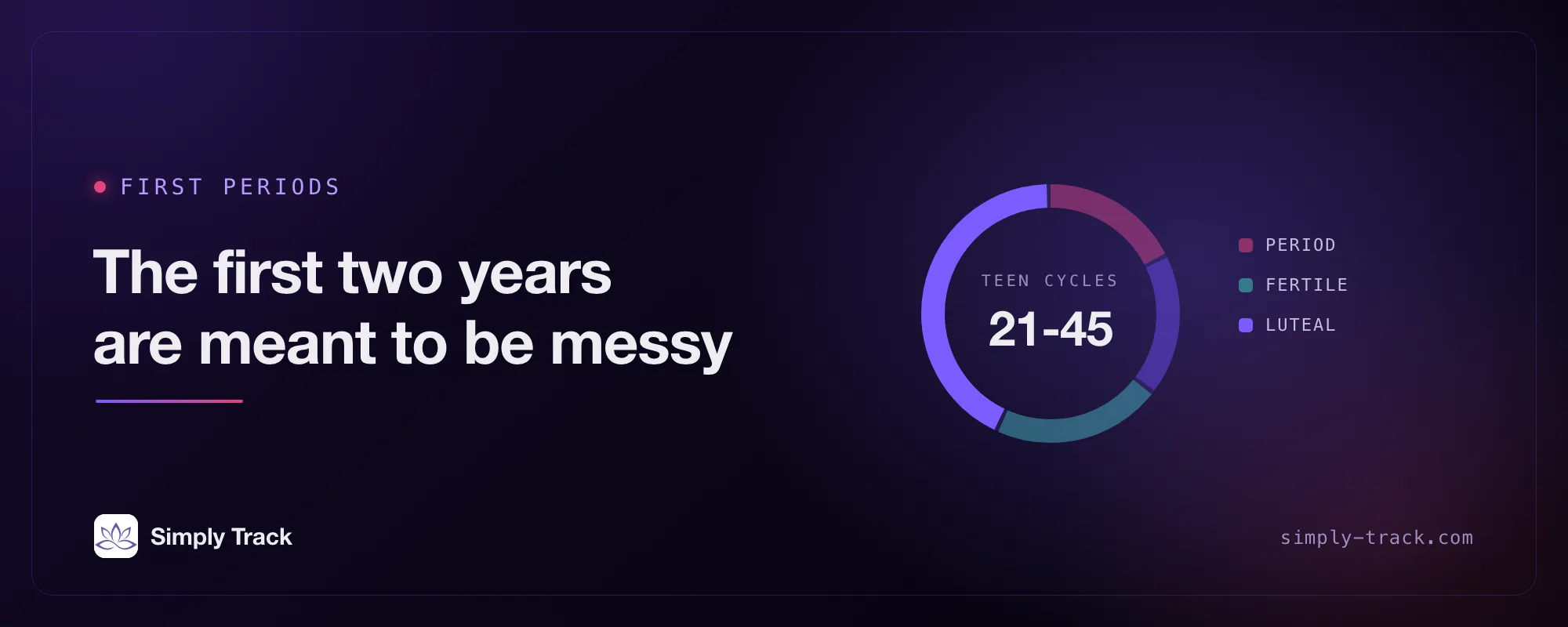
Getting to "settled" takes time. The American College of Obstetricians and Gynecologists and the American Academy of Pediatrics measure cycle length in a specific way. They count from the start of one period to the start of the next. In the first year after a first period, their guidance puts the 95th percentile for cycle length at around 90 days. That is because the hormonal system that controls ovulation is still maturing. A long wait after a first period is common on its own, sometimes weeks, sometimes a couple of months. It is not automatically something to worry about. Writing down the date it starts makes it much easier to notice this pattern settling over the following months. This can be as simple as a note on a phone or a calendar.
I Just Got My First Period. What Do I Do? covers the practical next steps, including why it is worth noting the date.
Starting with pads is fine, and so is anything else
Pads are the easiest place to start, though tampons, period underwear and menstrual cups are all safe and suitable from a first period onwards. NHS guidance notes that pads can be the simplest option for a very first period. Tampons and cups can take some getting used to.
Choosing a product does not have to happen all at once. It is fine to try something else next time. Flow is usually light at first. A regular absorbency product, or even a lighter one, is normally enough to start with, whatever type is chosen. Choosing Your First Period Product compares pads, tampons, period underwear and cups side by side.
When it is worth mentioning to a GP
Occasional heavy days are ordinary, but soaking through a pad or tampon every 1 to 2 hours, bleeding for more than 7 days, or passing clots bigger than a 10p coin are reasons to see a GP. NHS guidance lists these among the signs of a heavy period, alongside bleeding through to clothes or bedding and feeling unusually tired.
These thresholds matter more once periods are established than they do for a single first period, but they are still worth knowing. None of this is about a first period looking "wrong". It is simply what to keep in mind as periods continue. It also helps to tell a parent, carer or another trusted adult what is going on. This gives support day to day. It also means they know what to expect if a GP visit turns out to be useful.
The short version
A first period is typically a small reddish-brown stain, not a sudden gush. Total blood loss across any period sits at around 20 to 90ml. The first few periods are often lighter still, sometimes just a few spots of blood. It can last anywhere up to 7 days, though a first period is often shorter. The next one might not arrive for weeks or months while the body finds its rhythm. None of that is a sign that anything is wrong. The full picture is covered in Your First Period: Everything You Need to Know.
Simply Track includes a free, step-by-step first-period guide. It covers colour, amount, timing, and how to use pads, tampons, cups and more, whatever you choose. It stays free, always. Recording day one also means the app's predictions start learning your own rhythm from the very first entry. Like any prediction, though, these are estimates, never a form of contraception.
Sources
- NHS, Starting your periods: https://www.nhs.uk/conditions/periods/starting-periods/
- NHS, Periods: https://www.nhs.uk/conditions/periods/
- NHS, Heavy periods: https://www.nhs.uk/conditions/heavy-periods/
- ACOG and AAP Committee Opinion 651, Menstruation in Girls and Adolescents: Using the Menstrual Cycle as a Vital Sign: https://www.acog.org/clinical/clinical-guidance/committee-opinion/articles/2015/12/menstruation-in-girls-and-adolescents-using-the-menstrual-cycle-as-a-vital-sign
- ACOG, Your First Period (Especially for Teens), FAQ049: https://www.acog.org/womens-health/faqs/your-first-period
Common questions
Can a first period be brown?
Yes. NHS guidance describes a first period as usually a small reddish-brown stain rather than bright red blood, and colour naturally shifts between red, pink and brown as flow changes through any period. Brown or dark red on its own is not a sign that anything is wrong.
How much blood is normal for a first period?
NHS guidance puts total blood loss across a period at about 20 to 90ml, roughly 1 to 5 tablespoons. A first period is often lighter still, sometimes just a few spots of blood, and shorter too, since it can take the body several months to settle into a regular pattern.
How long does a first period usually last?
A period typically lasts 2 to 7 days, and a first period is often shorter than that while the body finds its rhythm. It can also be many weeks or even a couple of months before the next one arrives, which is normal in the first year.
Not medical advice
General information, not medical advice. If something about your cycle worries you, speak to a GP.

Keep track of your own cycle
Simply Track logs your period on your iPhone and Apple Watch, and its predictions sharpen the more you record. Your data stays in your own iCloud account.