What Is Normal for a First Period?
A first period is often a small brown stain, not a gush, and the two years that follow are meant to be irregular. Here is what counts as normal, and when it is worth seeing a GP.
Published 27 July 2026
A first period is usually a small reddish-brown stain, not a gush of red blood. It tends to be light and brief, and it is normal for periods to stay irregular for up to two years afterwards.
Almost nobody remembers being told what a first period would actually look like. They remember a leaflet, a slightly awkward assembly, and an advert involving blue liquid and a woman doing cartwheels. Then the real thing arrives, looks nothing like any of it, and the first honest question is not "what do I do?" but "is this normal?"
That question deserves a proper answer, because the gap between what people expect and what actually happens causes a lot of unnecessary worry. This article covers colour, amount and timing. For the fuller picture on products, school and everything else, see Your First Period: Everything You Need to Know.
It usually starts smaller than anyone expects
A first period is usually light, brief, and closer to brown than bright red, not the heavy gush shown in adverts.
The single most common surprise is the colour. A first period tends to begin as a small reddish-brown stain rather than a flow of bright red. The NHS describes it plainly: not a sudden gush, but a reddish-brown mark. That colour is normal, not old, dirty or a warning sign.
The quantity is the second surprise. Across an entire period, total blood loss is roughly 20 to 90ml, which works out at about one to five tablespoons. Spread across several days and absorbed into a pad, that looks and feels like considerably more than it is. What Does a First Period Look Like? walks through colour, amount and length in more detail.
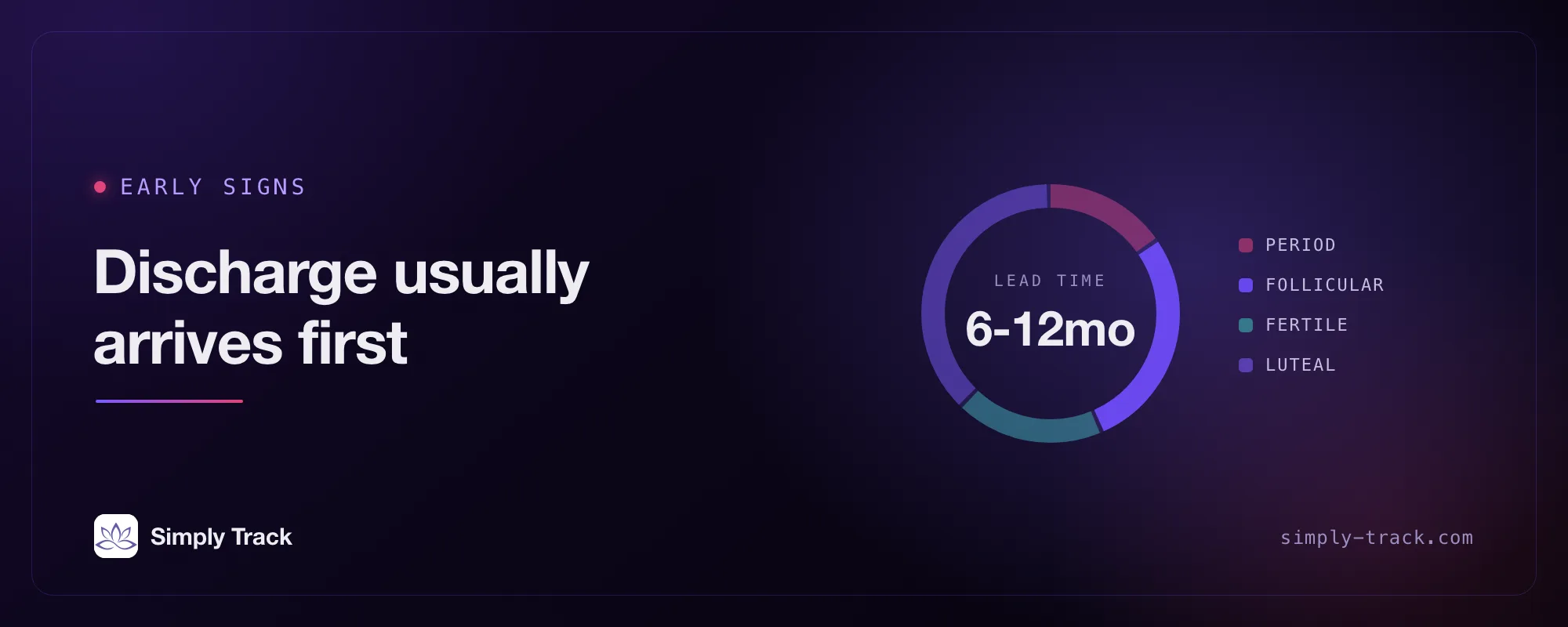
A first period can also be brief, sometimes as short as two days. It can then be followed by nothing at all for weeks, which brings us to the part that causes the most anxiety.
The first year or two is meant to be messy
Irregular cycles are normal for the first year or two after a first period, because the ovaries are still learning to ovulate reliably.
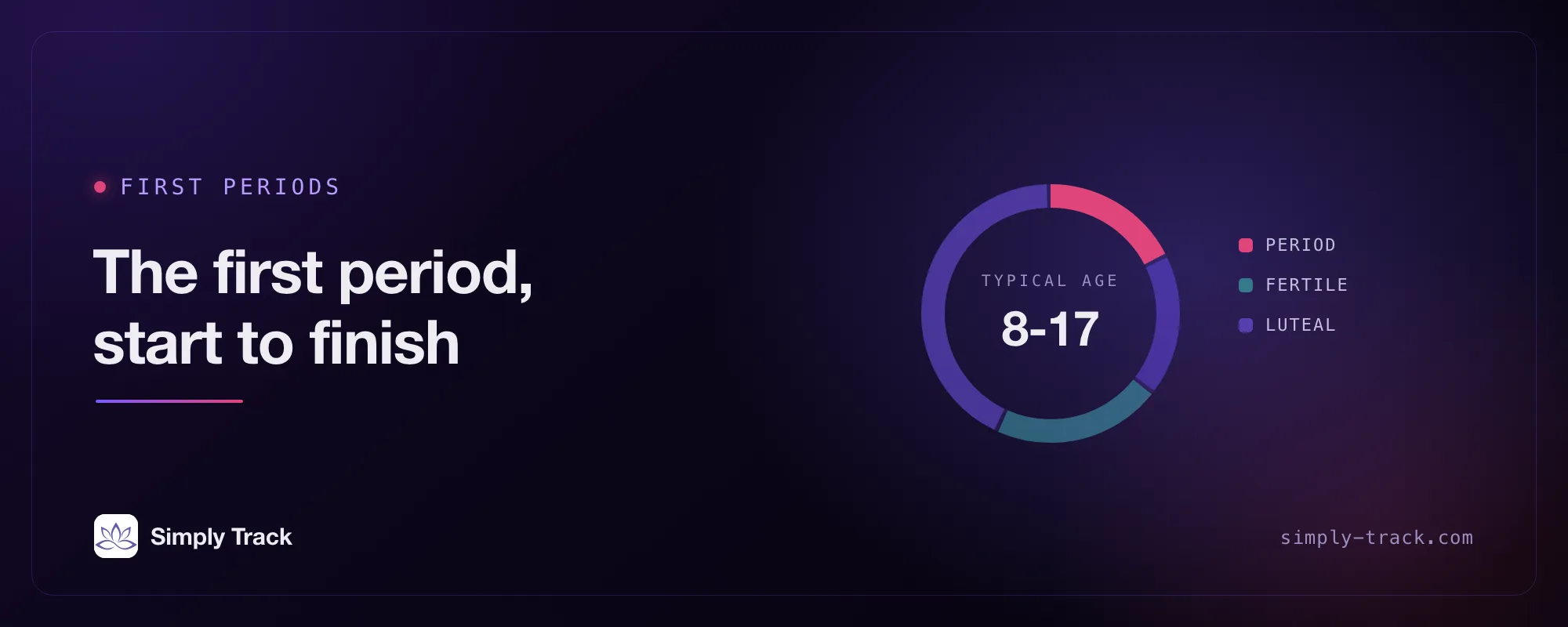
Periods start, on average, at around 12, though the range runs from about 8 to 17. They generally arrive around two years after the first visible signs of puberty, such as breast development.
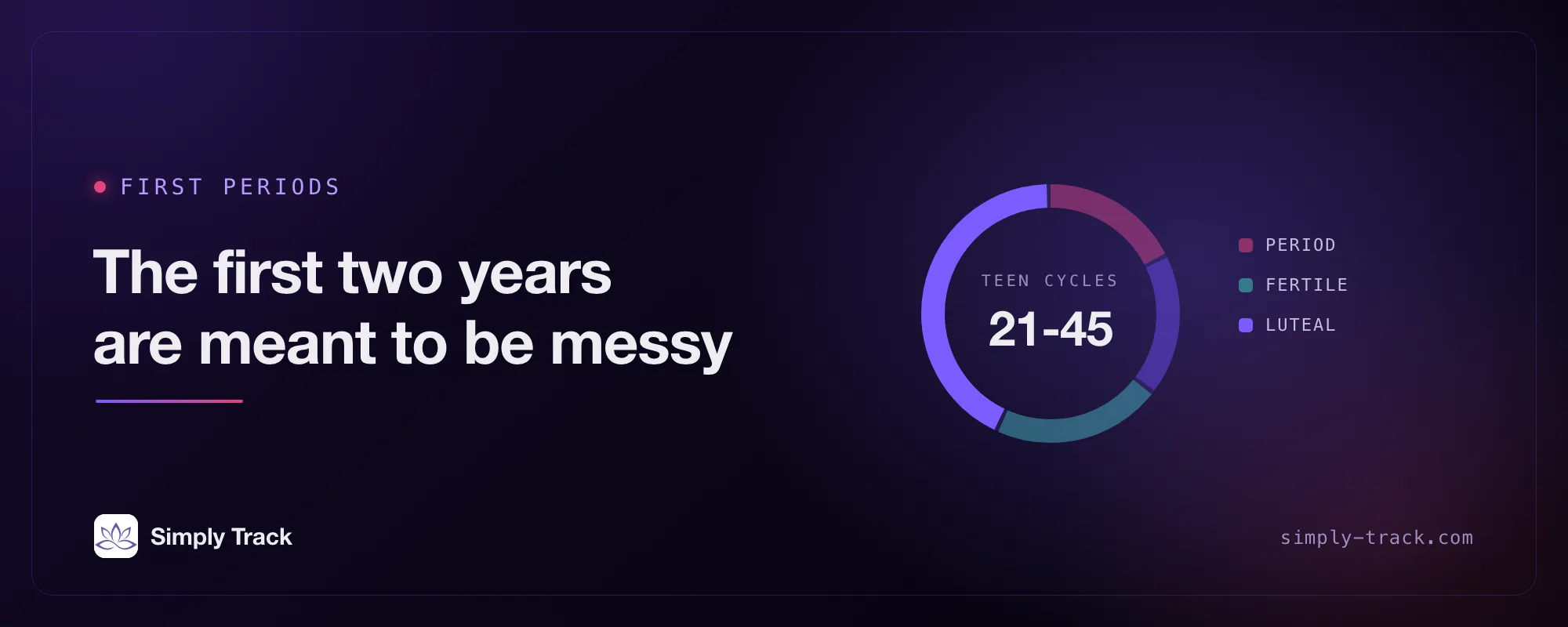
What follows is not a neat 28-day metronome. The ovaries are still learning to ovulate reliably, and until that settles, cycle lengths wander. Guidance from the American College of Obstetricians and Gynecologists and the American Academy of Pediatrics puts about 90 per cent of adolescent cycles somewhere between 21 and 45 days. In the first year after a first period, the spread is wider still, with the 95th percentile sitting as high as 90 days.
Read that again, because it is the reassurance most people never get: a gap of two months between early periods can be entirely ordinary. Irregular is not the same as unhealthy. It usually just means the system is still calibrating.
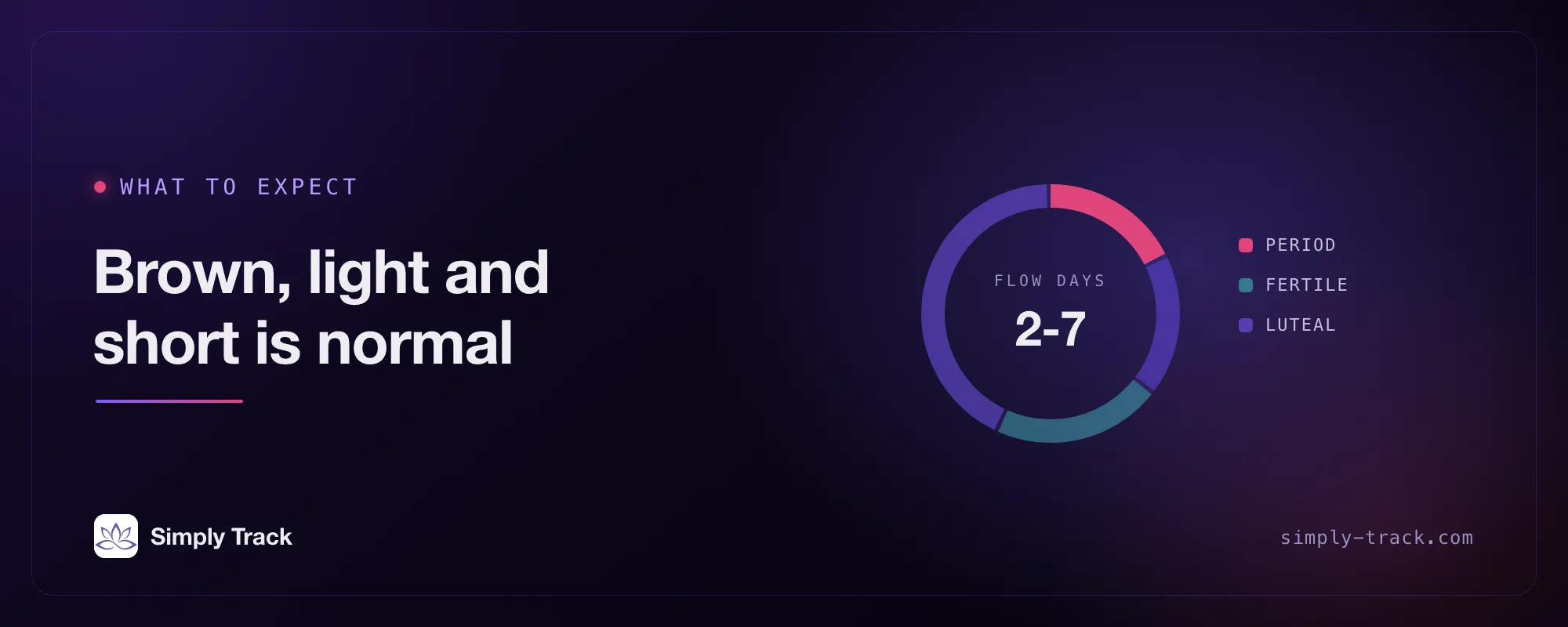
Once things do settle, typically within a couple of years, a cycle tends to run every 23 to 35 days with 2 to 7 days of bleeding. That is the baseline worth knowing, though "normal" is ultimately whatever turns out to be consistent for that individual person.
What is genuinely worth a GP appointment
Most irregularity in the early years is normal, but a few specific signs, such as no period by 15 or bleeding that will not stop, are worth a GP appointment.
Reassurance is useful right up until it talks someone out of asking for help. A few patterns are worth raising with a GP or practice nurse rather than waiting it out:
- No period by the age of 15, or by 13 if there are no other signs of puberty starting.
- Bleeding that regularly runs longer than seven days.
- Soaking through a pad or tampon every hour or two for several hours in a row.
- Periods that stop for months at a time once they have been established.
- Pain that paints over ordinary life, meaning school, work or sleep are being missed.
None of these mean something is wrong. They mean the question is worth asking properly. Period pain that stops someone functioning, in particular, is routinely dismissed for years, and it should not be.
Why writing it down changes the conversation
Recording day one turns a vague memory into a pattern a GP or nurse can actually work with.
Here is the practical part. Almost every question anyone has about their cycle is a question about a pattern, and a pattern cannot be reconstructed from memory. "Was the last one heavy?" and "How long since the one before?" are unanswerable three months later.
Recording day one, even as a single tap, turns a vague worry into an answerable question. Two or three cycles in, the shape starts to appear. Six in, and the person turning up to an appointment can say "My cycles have run 24, 38, 29 and 51 days, and the last two were heavy for four days" instead of "I think they're a bit all over the place". Doctors can work with the first sentence. They can do very little with the second.
That is also the honest case for tracking during the wobbly early years specifically. The instinct is to wait until things settle before bothering, but the unsettled stretch is precisely the period where written evidence is most useful, because it is the only way to tell a normal settling-in phase from something that needs a look.
What to look for in a tracking app
A tracking app worth using keeps cycle data on the device, needs no account, and does not sell information to advertisers.
Cycle data is among the most sensitive data a person holds, and menstrual apps have not always treated it that way. Regulators have documented real cases of specific apps sharing intimate data with advertising and analytics networks, covered in more depth in Is Your Period App Selling Your Data?. Anyone choosing one, and particularly any parent choosing one for a teenager, should ask three questions:
- Does it require an account? An account means a copy of the data on somebody else's servers.
- Where is the data stored? On the device is meaningfully different from in the cloud.
- How does the app make money? If the answer is advertising, the data is part of the product.
Being able to export a clean summary for an appointment is a bonus. Being able to delete everything, permanently, in one action, is not.
The short version
A first period is normal if it is brown or light, brief, and part of up to two years of irregular cycles, with a GP needed only for specific warning signs.
A first period is often brown, often light, and often brief. The couple of years afterwards are supposed to be irregular. Settled cycles run around 23 to 35 days with 2 to 7 days of bleeding, and about one to five tablespoons of blood in total. Anything that persistently sits outside that, or any pain that stops normal life, is worth a conversation with a GP.
And in the meantime, write down day one.
Simply Track was built around that first cycle rather than bolted on as an afterthought. Answer "it's my first period" during setup and the app opens a calm, judgement-free walkthrough of what is happening and how to use pads, tampons and cups, which stays free forever. Tracking, the calendar and the guides are free. There is no account, no ads, and cycle data stays on the device unless the owner chooses to sync it to their own private iCloud.
Sources
- NHS, Starting your periods: https://www.nhs.uk/conditions/periods/starting-periods/
- ACOG and AAP Committee Opinion 651, Menstruation in Girls and Adolescents: Using the Menstrual Cycle as a Vital Sign: https://www.acog.org/clinical/clinical-guidance/committee-opinion/articles/2015/12/menstruation-in-girls-and-adolescents-using-the-menstrual-cycle-as-a-vital-sign
Common questions
How long can a first period last, and is a long gap before the next one normal?
A first period can be brief, sometimes as short as two days, and it may be followed by no bleeding at all for several weeks. That gap is part of the ovaries learning to ovulate regularly, and on its own it is not a sign of a problem.
Why is a first period often brown instead of red?
A first period is often a small reddish-brown stain rather than a flow of bright red blood. The NHS describes it as not a sudden gush but a reddish-brown mark, and that colour is entirely normal. It is not old, dirty, or a sign that anything is wrong, whatever shade it takes.
When is it worth seeing a GP about a first period?
See a GP if periods have not started by 15, or by 13 with no other signs of puberty, if bleeding regularly runs longer than seven days, if pads or tampons are soaked through every hour or two for several hours, or if pain regularly stops school, work or sleep.
Not medical advice
General information, not medical advice. If something about your cycle worries you, speak to a GP.

Keep track of your own cycle
Simply Track logs your period on your iPhone and Apple Watch, and its predictions sharpen the more you record. Your data stays in your own iCloud account.