Signs Your First Period Is Coming
Long before there's any blood, your body sends warning signs in a fairly predictable order. Here's what to look for, and what actually helps.
Published 27 July 2026
Before a first period arrives, your body usually gives some warning. Breast buds, a growth spurt and a clear or white discharge tend to show up first. They usually appear in that order, over about two years.
Breast buds are usually the earliest sign
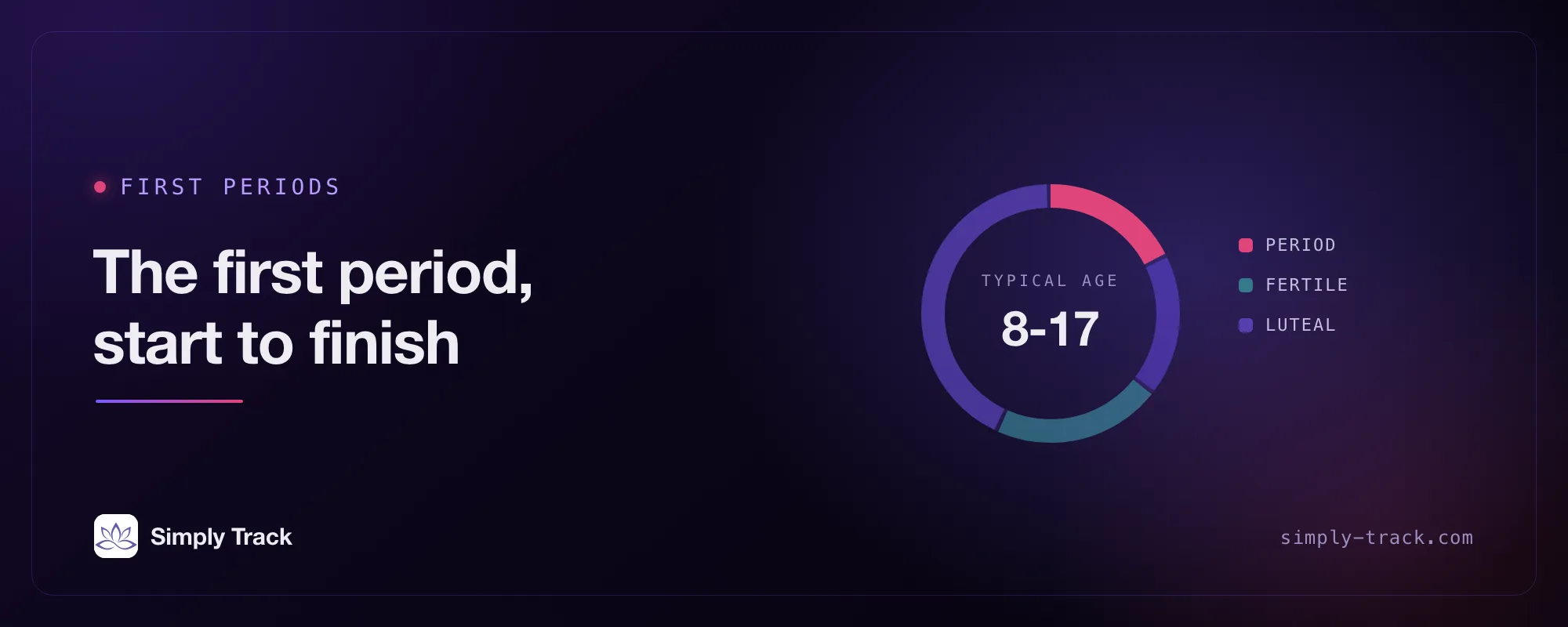
For most girls, the first outward sign of puberty is a breast bud, a small, sometimes tender mound under the nipple, and periods usually follow about two years later (NHS, AAP). Breast buds can appear any time from around age 8 to 13. It's common for one side to start before the other. That's normal, not a cause for concern. The American Academy of Pediatrics puts the gap slightly wider, at roughly 2 to 3 years from breast buds to first period. So "about two years" is a guide, not an exact countdown (AAP). Periods themselves usually begin around age 12. Anywhere from about 8 to 17 still counts as normal (NHS). For the fuller picture of what's typical at this stage, see the complete first-period guide. It covers everything from start to finish.
Your growth spurt tends to peak before your period, not after
The fastest stretch of height growth in puberty usually happens between when breast buds start and about six months before a first period, after which it eases off (AAP). A noticeable growth spurt, needing longer trousers more often than usual, tends to happen in the middle of this timeline, rather than right before or after a first period. That surprises a lot of people, because it's easy to assume periods and growth spurts arrive together. In practice, most of the height jump is done by the time a first period shows up. Growth carries on afterwards too, just more gradually.
Discharge in the months beforehand is normal, not a warning
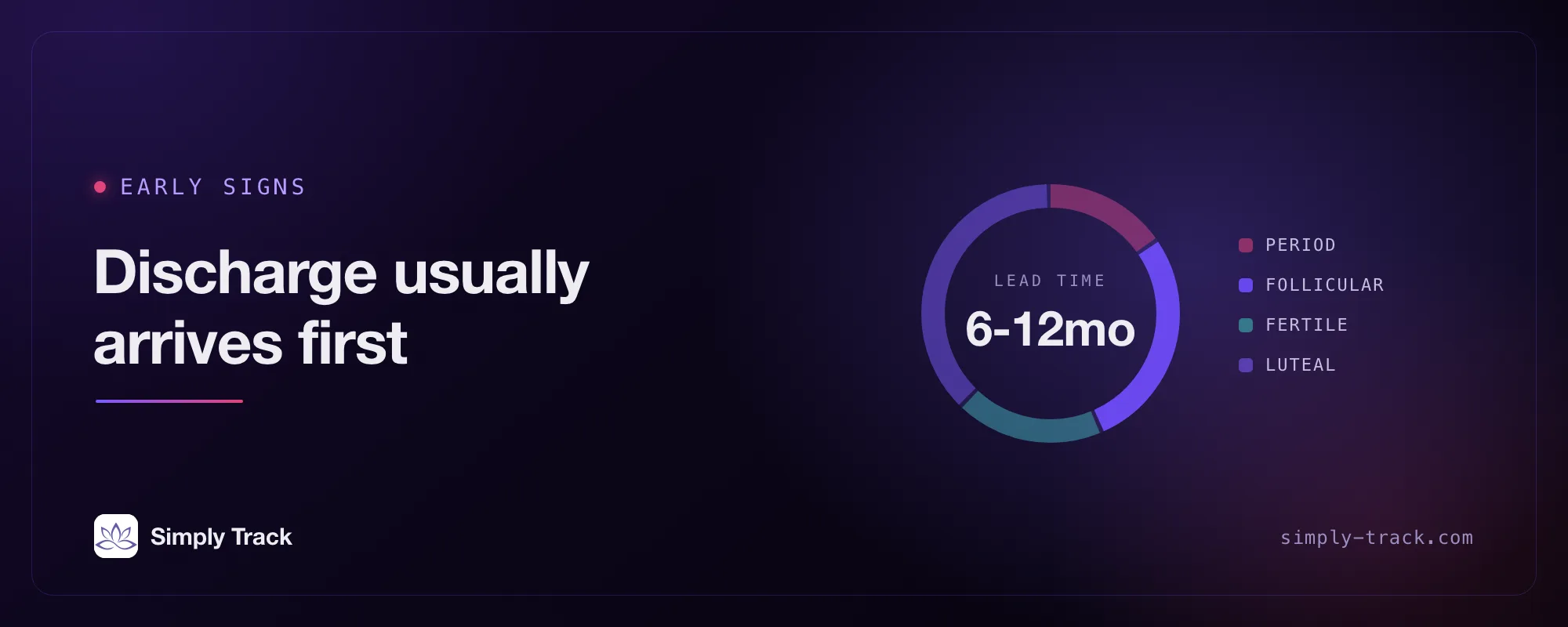
A clear or white vaginal discharge commonly starts about 6 to 12 months before a first period, and it's a normal, healthy sign rather than something to worry about (AAP). Normal discharge is clear or white. It can be anywhere from thick and sticky to slippery and wet, without a strong or unpleasant smell (NHS). For a lot of people, this is the sign that feels most personal. You notice it rather than see it, unlike a breast bud or a growth spurt, and it can catch you off guard the first time, even though it's completely ordinary. If it changes colour, develops a strong smell, or comes with itching or soreness, mention it to a GP rather than waiting it out (NHS).
Pubic and underarm hair round out the list
The NHS lists growing underarm and pubic hair as another sign that a first period is on its way. It tends to arrive alongside the other changes, or shortly after them, rather than first. This hair growth is driven by hormones from the adrenal glands, not the ovaries. That's part of why it doesn't always line up neatly with breast development or discharge in the same order for everyone (NHS). As with everything in puberty, the exact order and pace vary from person to person, so having some but not all of these signs is still entirely normal.
What actually helps while you wait
None of these signs predicts the exact day, so the most useful move is to be quietly ready rather than to try to time it. Once breast development or discharge has started, keep a pad in a bag, a locker, or with a trusted teacher. This removes most of the stress if a period happens unexpectedly. When it does arrive, it's rarely dramatic. The NHS describes it plainly: not a sudden gush, but a reddish-brown stain you might first notice on your underwear or the sheets in the morning (NHS). See what a first period actually looks like for more on what to expect in those first few days.
It also helps to know your plan. Decide who you'd tell first, and where a spare pad lives, whether that's a school kit or your own bag. If it does start when you're not expecting it, here's exactly what to do. Feeling nervous about any of this is normal too, not a sign that anything is wrong. If none of these signs have appeared by around 13, or periods haven't started by 15, a GP visit is a sensible next step. Most of the time it just means a slower timeline, and a GP can check that and put your mind at ease (NHS).
The short version
Breast buds usually come first, any time from about 8 to 13. A growth spurt tends to follow. It peaks, then eases off closer to the first period. Discharge is typically the last major signal. It shows up roughly 6 to 12 months beforehand, alongside pubic and underarm hair. None of it pins down an exact date. The practical move is to keep a pad within reach once the earlier signs start, and to know who you'd tell if it happens.
Simply Track was built around exactly this uncertainty. Answering "it's my first period" during setup opens a free, step-by-step guide to what's happening, including how pads, tampons, cups and more actually work. That part of the app is free for good. There's no account to set up and no ads. Nothing about your cycle leaves your phone unless you choose to back it up to your own private iCloud. Once a first period does arrive, noting the date is the one habit that pays off later. It helps you spot a pattern and answer a GP's questions, and the app handles that from day one.
Sources
- NHS, Starting your periods: https://www.nhs.uk/conditions/periods/starting-periods/
- NHS, Vaginal discharge: https://www.nhs.uk/symptoms/vaginal-discharge/
- NHS (North West Midlands Cystic Fibrosis Centre), Puberty in Cystic Fibrosis (normal puberty in girls, Appendix 1): https://nwmcfc.nhs.uk/wp-content/uploads/pdf-guidelines/B-6.2-Puberty-V1.pdf
- American Academy of Pediatrics (HealthyChildren.org), Physical Development in Girls: What to Expect During Puberty: https://www.healthychildren.org/English/ages-stages/gradeschool/puberty/Pages/Physical-Development-Girls-What-to-Expect.aspx
Common questions
Can your first period still surprise you, even with warning signs?
Yes. Breast development, a growth spurt and discharge are common clues, but none of them predicts the exact day. Many people are still caught off guard, and that is completely normal. Keeping a pad in your bag from the time you notice any of these signs is the simplest safety net.
What age do girls get their first period?
Most start around age 12, though anywhere from about 8 to 17 is considered normal (NHS). It usually happens roughly two years after the first signs of puberty, most often breast development, begin. See a GP if periods have not started by 15, or by 13 with no other puberty signs.
Can discharge tell you your first period is close?
A clear or white discharge often appears about 6 to 12 months before a first period (AAP), making it one of the later signs rather than the earliest. It is a normal, healthy sign, not a precise countdown. If it changes colour, smells strong or comes with itching, mention it to a GP rather than waiting it out.
Not medical advice
General information, not medical advice. If something about your cycle worries you, speak to a GP.

Keep track of your own cycle
Simply Track logs your period on your iPhone and Apple Watch, and its predictions sharpen the more you record. Your data stays in your own iCloud account.