When Period Pain Is Not Normal
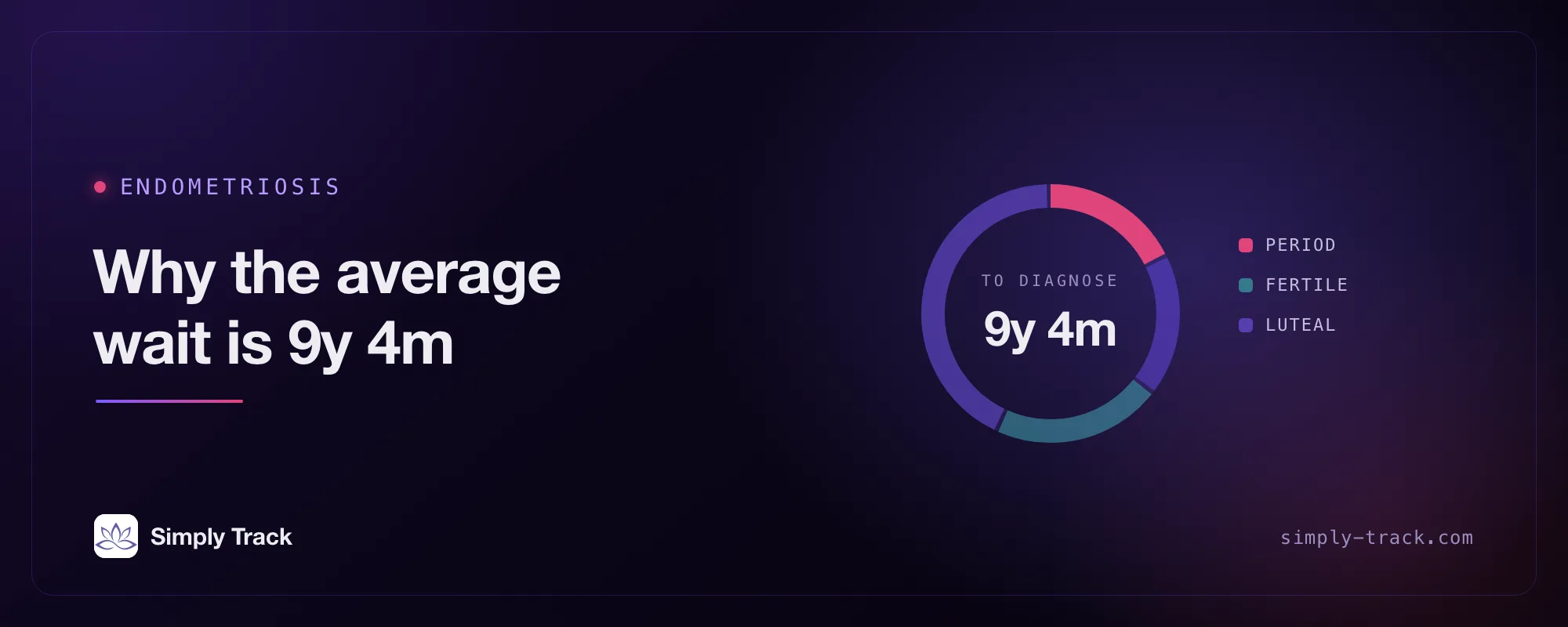
The average wait for an endometriosis diagnosis in the UK is now 9 years and 4 months. Here is how to tell ordinary period pain from pain that is worth a GP appointment.
Published 27 July 2026
Period pain is not normal when it stops your usual daily activities, keeps worsening, or comes with pain during sex, bowel movements or urination. The NHS and NICE guideline NG73 set out exactly where that line sits.
Endometriosis UK's March 2026 report drew on a survey of 3,075 people in the UK diagnosed with endometriosis. The average time from first visiting a GP with symptoms to receiving a diagnosis had risen to 9 years and 4 months, up from 8 years and 10 months in 2023 and 8 years in 2020. For ethnically diverse communities the figure is 11 years.
Nearly a decade. Not waiting for treatment, but waiting to be told what is wrong.
The Royal College of Obstetricians and Gynaecologists called the rise "deeply concerning". That is the backdrop to a question that sounds simple and is not: how do you tell ordinary period pain from pain that needs looking at?
Where the line actually sits
Ordinary period pain is muscular cramping that eases within three days with heat, movement or painkillers. It moves into GP territory when periods become more painful, heavier or irregular, or when the pain stops you doing your usual activities.
Most period pain is muscular. The womb contracts to shed its lining, and the contractions hurt. The NHS describes period pain as usually lasting up to three days, felt as cramping in the lower abdomen that can spread to the back and thighs, and generally responsive to heat, gentle movement and over-the-counter painkillers such as paracetamol or ibuprofen.
That is the baseline. The NHS advises seeing a GP if periods become more painful, heavier or irregular, or if period pain is stopping you doing your usual daily activities.
The second half of that sentence is the important one. The measure is not how high the pain scores out of ten. It is what the pain takes away. Missed work, cancelled plans, a day in bed every month, painkillers that used to work and no longer do.
NICE guideline NG73 gives clinicians a fuller list of signals that should raise suspicion of endometriosis: chronic pelvic pain, period-related pain that affects daily activities and quality of life, deep pain during or after sex, cyclical bowel or bladder symptoms such as painful bowel movements or pain passing urine, and infertility alongside any of those.
Adenomyosis belongs in the same conversation and gets named far less often. The NHS describes it as the womb lining growing into the muscle of the womb wall, and its signature is painful periods and heavy bleeding together.
Why the delay is nine years long
The nine-year average comes from pain that gets normalised early, hormonal treatment started without investigation, no single test that confirms or rules out endometriosis, and long referral waits. None of it is the patient's fault.
Three things stack up.
Normalisation starts early. In the Endometriosis UK survey, 65 per cent of respondents said that with hindsight their symptoms had started when they were 17 or under, but only 35 per cent sought medical help at the time. If everyone around you says periods are meant to hurt, agony reads as ordinary. Respondents took an average of 3.5 years from first noticing symptoms to asking a healthcare professional about them, and that figure has not meaningfully shifted since 2020.
Symptoms get absorbed rather than investigated. Eighty per cent of respondents were prescribed hormonal contraception for their symptoms before any investigation took place. Of those, 55 per cent had no discussion at all about what might be causing the symptoms. Hormonal treatment is a legitimate first-line option and often helps. The problem is a treated symptom with no explanation attached. The pain quietens and the question goes away.
Over half of respondents, 55 per cent, had been to A&E with their symptoms. Of those, 46 per cent said that when they attended, nothing happened and they were told to go home. Endometriosis UK reports that on average it takes 10 appointments with symptoms before a GP mentions endometriosis.
There is no quick test. No blood test rules endometriosis in or out. Imaging helps but does not settle it, which is why NG73 explicitly instructs clinicians not to exclude the possibility of endometriosis when the abdominal or pelvic examination and the ultrasound are both normal, and to recognise that referral may still be needed after a normal scan. A normal scan is not an all-clear, and anyone sent away on the strength of one deserves to know the guideline says so.
Access is the other bottleneck. A third of respondents waited more than a year after referral.
What a GP appointment actually involves
Expect a symptom history, an abdominal examination and often a pelvic one, and usually a referral for a transvaginal ultrasound or on to gynaecology. Knowing the shape of the appointment removes the dread.
It starts with history. Expect questions about where the pain sits, when in the cycle it comes, how long it lasts, what it stops you doing, what you have already tried, and whether there is pain with sex, bowel movements or passing urine.
NG73 says to offer an abdominal and pelvic examination to look for masses and pelvic signs. Anyone can decline an internal examination, and it is reasonable to ask for a chaperone.
Next is usually a transvaginal ultrasound, which NG73 says should be offered to everyone with suspected endometriosis even when the examination was normal. Blood tests may be run to look for other explanations, including anaemia if periods are heavy.
From there the routes are hormonal treatment, pain management, referral to gynaecology, or referral to a specialist endometriosis centre. Diagnosis is sometimes confirmed by laparoscopy, a camera passed through a small cut in the abdomen.
A short GP appointment is not long to compress years of symptoms into. Which is the whole argument for turning up with something written down.
What a written record changes
A written pain and symptom record replaces vague description with data, shows a pattern over time, and survives a long wait for referral.
NG73 tells clinicians to inform people with suspected or confirmed endometriosis that keeping a pain and symptom diary can aid discussions. That is guidance to the doctor, not a favour to them.
A record does three specific things in the room.
It replaces adjectives with data. "Bad periods" invites reassurance. "Pain scoring 8 or above on days one and two of the last six cycles, four days of work missed in three months, ibuprofen no longer effective since March" invites investigation.
It shows a pattern over time. A single appointment is a snapshot. Six months of entries show whether things are worsening, which is one of the strongest reasons to escalate.
It survives the wait. When a referral takes a year, the notes made in month one are still there in month twelve, and the next appointment starts where the last one finished.
The short version
Period pain that responds to heat and painkillers and lasts up to three days is ordinary. Pain that stops your usual activities, worsens over time, or comes with pain during sex, bowel movements or urination is worth a GP appointment. Endometriosis and adenomyosis are common, named in NHS and NICE guidance, and neither is diagnosed by being brave about it. A normal scan does not rule endometriosis out. Go with dates, pain scores and what you had to cancel. Pain is one signal among several your cycle can send: see Your Cycle Is a Vital Sign for the others.
Simply Track exists to make that last part effortless. The daily Log tab records pain, bleeding and symptoms in a few taps, and the doctor report turns months of entries into a clean PDF, generated on the device and anonymous by default. Tracking, the calendar and the first-period guides are free. The Log tab, Insights and the report are Premium. The app does not diagnose anything and never will. It only makes sure that when the appointment comes, the evidence is in your hand rather than in your memory.
Sources
- Endometriosis UK, The State of Endometriosis Care in the UK: A Roadmap for Driving Down Diagnosis Times and Improving Access to Care (published 2 March 2026): https://www.endometriosis-uk.org/sites/default/files/2026-02/Endometriosis%20-%20The%20State%20of%20Endometriosis%20Care%20Report.pdf
- Endometriosis UK, Endometriosis UK release new report highlighting alarming increase in endometriosis diagnosis times: https://www.endometriosis-uk.org/endometriosis-uk-release-new-report-highlighting-alarming-increase-endometriosis-diagnosis-times
- RCOG, RCOG responds to Endometriosis UK report showing rise in endometriosis diagnosis times: https://www.rcog.org.uk/news/rcog-responds-to-endometriosis-uk-report-showing-rise-in-endometriosis-diagnosis-times/
- NICE NG73, Endometriosis: diagnosis and management, Recommendations: https://www.nice.org.uk/guidance/ng73/chapter/Recommendations
- NHS, Period pain: https://www.nhs.uk/conditions/period-pain/
- NHS, Endometriosis: https://www.nhs.uk/conditions/endometriosis/
- NHS, Adenomyosis: https://www.nhs.uk/conditions/adenomyosis/
Common questions
How do you know if period pain is normal or something to get checked?
Ordinary period pain is cramping in the lower abdomen, sometimes spreading to the back or thighs, usually lasting up to three days and easing with heat, movement, ibuprofen or paracetamol, per the NHS. See a GP if periods become more painful, heavier or irregular, or if period pain stops you doing your usual daily activities.
What symptoms suggest endometriosis rather than ordinary period pain?
NICE guideline NG73 lists chronic pelvic pain, period pain that affects daily activities and quality of life, deep pain during or after sex, cyclical bowel or bladder symptoms such as painful bowel movements, and infertility alongside any of those. Adenomyosis, where the womb lining grows into the muscle wall, causes painful periods with heavy bleeding and deserves a GP conversation.
Why does it take so long to get diagnosed with endometriosis?
Endometriosis UK's March 2026 report put the average UK diagnosis time at 9 years and 4 months, up from 8 years 10 months in 2023. Pain gets normalised early, hormonal treatment is often started without investigation, no single test confirms or rules out endometriosis, and referral waits add further delay.
Not medical advice
General information, not medical advice. If something about your cycle worries you, speak to a GP.

Keep track of your own cycle
Simply Track logs your period on your iPhone and Apple Watch, and its predictions sharpen the more you record. Your data stays in your own iCloud account.