How to Put On a Pad, Step by Step
Wings, backing strip, which way round, wider end back. Eight calm steps, in order, with the reasons behind each one.
Published 27 July 2026

Step by step
Wash your hands
Clean hands first, every time you handle a pad.

Unwrap it
Take the pad out of its wrapper and keep the wrapper. You'll use it again later.
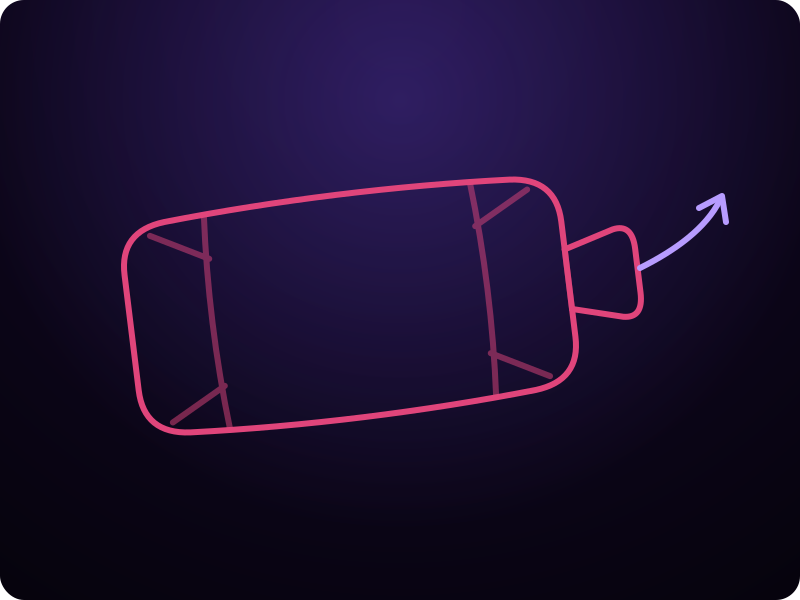
Peel the backing off
Peel away the strip covering the sticky side. It comes off in one go.
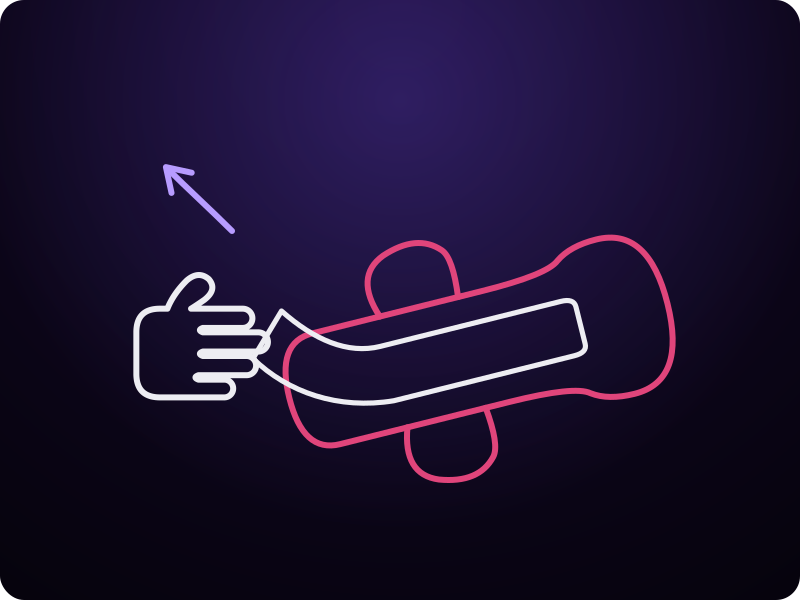
Stick it to your underwear
Press the sticky side onto the centre of the gusset, wider end towards the back.
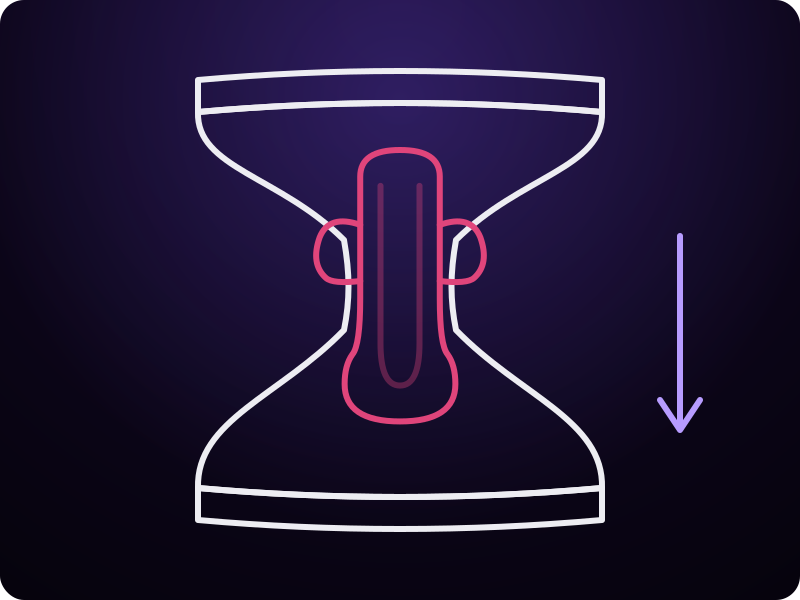
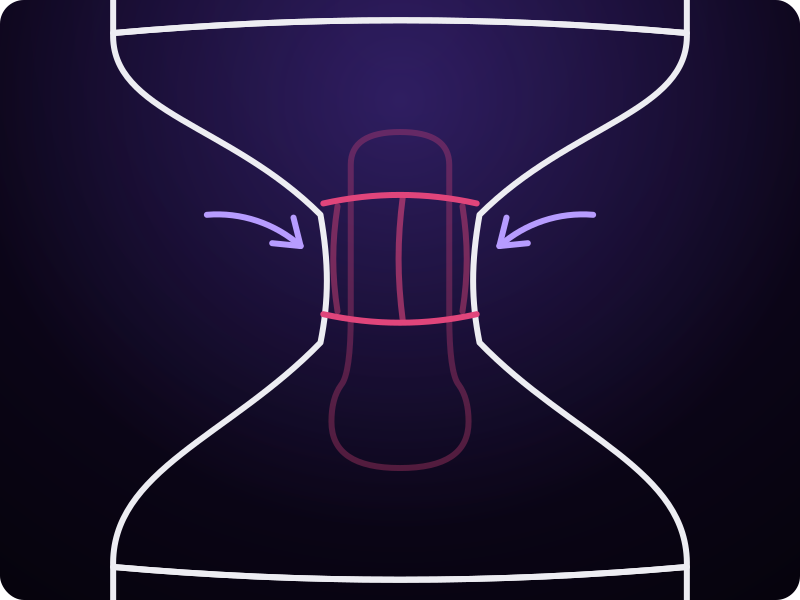
Fold the wings under
If your pad has wings, peel their smaller strips off and fold them underneath your underwear.
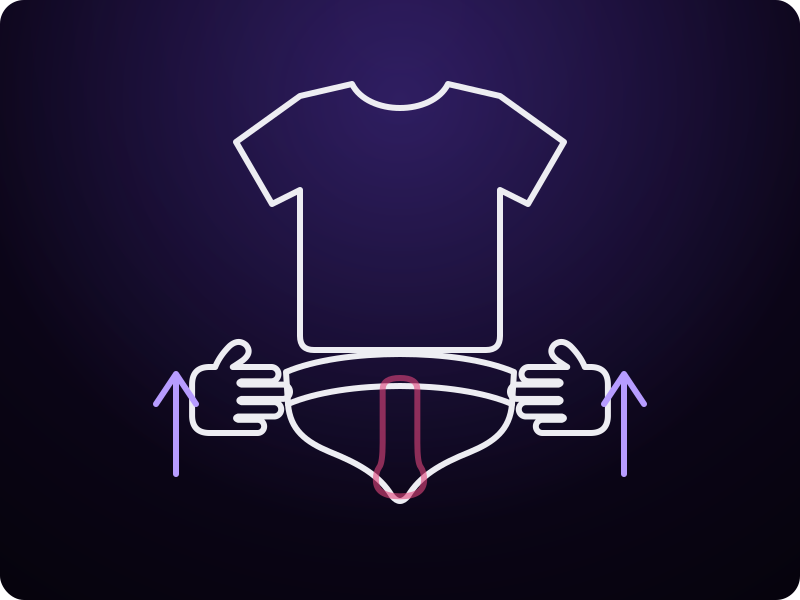
Pull up and check
Pull your underwear up and feel that the pad sits flat and centred, not bunched or twisted.
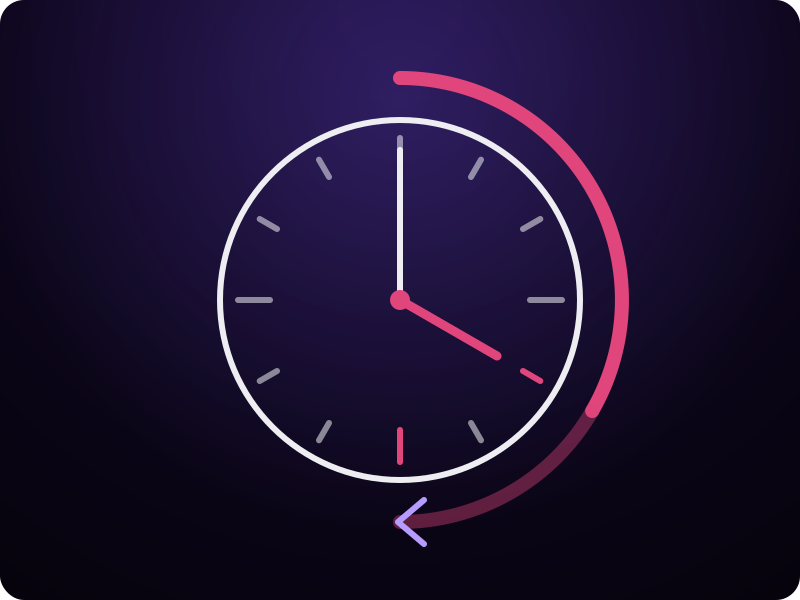
Change it every 4 to 6 hours
Swap it for a fresh one every 4 to 6 hours, or sooner if it feels full.
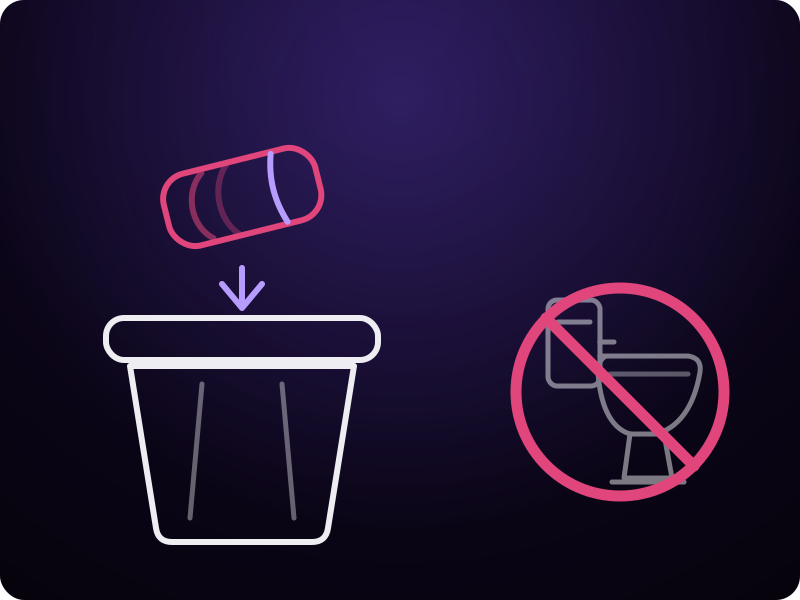
Wrap it and bin it
Roll the used pad in its wrapper (or your new pad's wrapper) and put it in the bin. Never flush it.
Putting on a pad takes four moves. Peel the backing off and stick the pad to your underwear, wider end towards the back. Fold any wings underneath, then pull up and check it sits flat.
Getting the orientation right
The sticky side goes down onto your underwear, and the wider, more padded end usually sits towards the back. That extra length covers you where you need it most once you sit down. If you're ever unsure which end is which, go by the shape, not any print on the pad. Not every brand marks it the same way. Slim, evenly shaped liners work either way round, so don't worry about those.
Wings or no wings
Wings are extra hold, not a different kind of pad. If yours has wings, peel the smaller backing strips off each one. Fold them underneath your underwear so they wrap around the edge. This helps keep the pad centred and lowers the chance of it sliding or leaking out the side, which matters most on an active day. Pads without wings rely on the sticky strip alone. Both work well. It's a comfort preference, not a rule.
Day pads, night pads and sleep
Night pads are longer and more absorbent than day pads, which suits lying down rather than standing up. A day pad is shaped for someone upright most of the time. A night pad has extra length and coverage at the back. This gives more room for the flow that can build up while you sleep. Wear one to bed and change it as soon as you wake up. Keep a spare pair of dark underwear close by for the first few nights, until you get a feel for what your period is doing.
Timing: when to swap it out
Change a pad roughly every 4 to 6 hours, and sooner if it feels full, damp, or has been on that long. Flow tends to be heaviest in the first 2 days of a period. You may need to change more often at the start, and less towards the end. A fresh pad costs nothing, and a damp one is uncomfortable. When in doubt, change it.
Leak insurance while you're starting out
A spare pad and a change of dark underwear cover most of what can go wrong in your first few periods. A first period is often just a small reddish-brown stain, not a sudden gush. The real risk early on is being caught without a spare, not a heavy flow. Keep one pad in your bag. If you can, keep another somewhere else too, such as a locker, a coat pocket, or with a parent, carer or friend you trust. Choosing your first period product and building a school kit both cover this in more detail.
For everything else about a first period, from what to expect to when it's worth seeing a GP, the complete first-period guide brings it all together in one place.
Simply Track's first-period guide walks through pads the same way, one calm step at a time, alongside tampons, cups and more. It opens the moment you tell the app it's your first period. It's free, always. The calendar to note the date is free too. Once your first pad is on, marking day one takes seconds.
Sources
- NHS, Starting your periods: https://www.nhs.uk/conditions/periods/starting-periods/
- NHS, Periods: https://www.nhs.uk/conditions/periods/
- NHS inform, Choosing period products: https://www.nhsinform.scot/healthy-living/womens-health/girls-and-young-women-puberty-to-around-25/periods-and-menstrual-health/choosing-period-products/
Common questions
Which way round does a pad go?
The sticky side faces down onto your underwear, and the wider, more padded end usually sits towards the back for extra coverage while you're sitting or lying down. If you're ever unsure which end is which, the shape is the guide, not any print on the pad.
How often should I change a pad?
About every 4 to 6 hours, or sooner if it feels full, damp, or has simply been on that long. Flow tends to be heaviest in the first 2 days of a period, so you might change more often at the start and less as it tails off.
Can you sleep in a pad?
Yes. Night pads are longer and more absorbent than day pads, which gives more room for the flow that can build up while you're lying down. Change it as soon as you wake up, and keep a spare pair of dark underwear nearby in case of a leak.
Not medical advice
General information, not medical advice. If something about your cycle worries you, speak to a GP.

Keep track of your own cycle
Simply Track logs your period on your iPhone and Apple Watch, and its predictions sharpen the more you record. Your data stays in your own iCloud account.