How to Use a Tampon for the First Time
Wash your hands, relax, and follow the pack's instructions: a calm, step-by-step guide to your first tampon.
Published 27 July 2026

Step by step
Wash your hands
Clean hands lower the risk of infection every time you insert or remove a tampon.

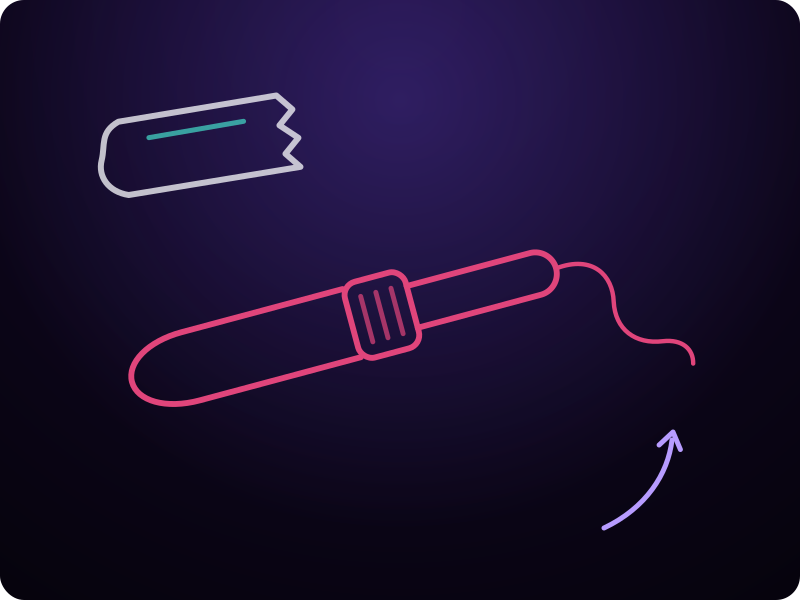
Unwrap it and check the string
Unwrap the tampon fully and make sure the string is hanging free, ready for you to pull later.
Find a comfortable position
Get into whatever position feels most comfortable and relaxed, sitting or standing.
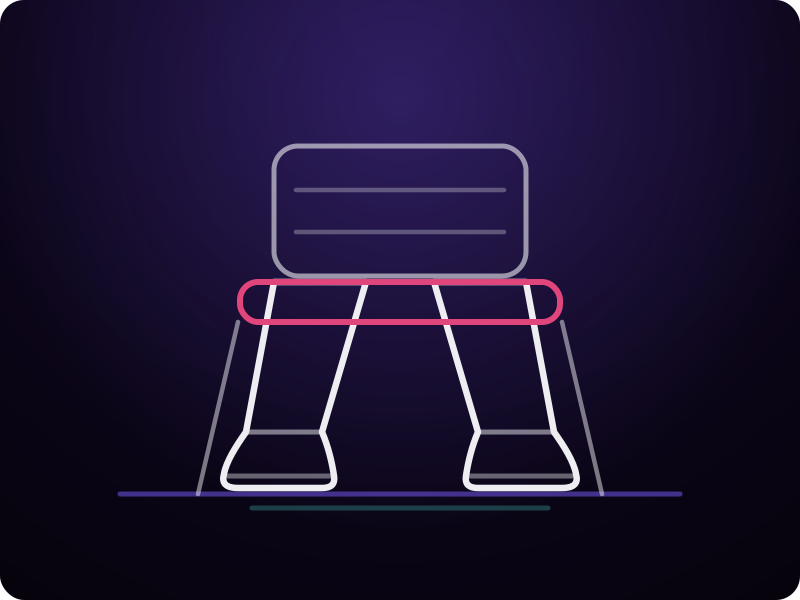
Relax before inserting
Relax, then follow the angle and depth shown in the pack's instructions rather than pushing straight in.

Insert following the pack's instructions
Insert the tampon as far as the pack's instructions describe. This varies slightly between brands and between applicator and non-applicator designs.

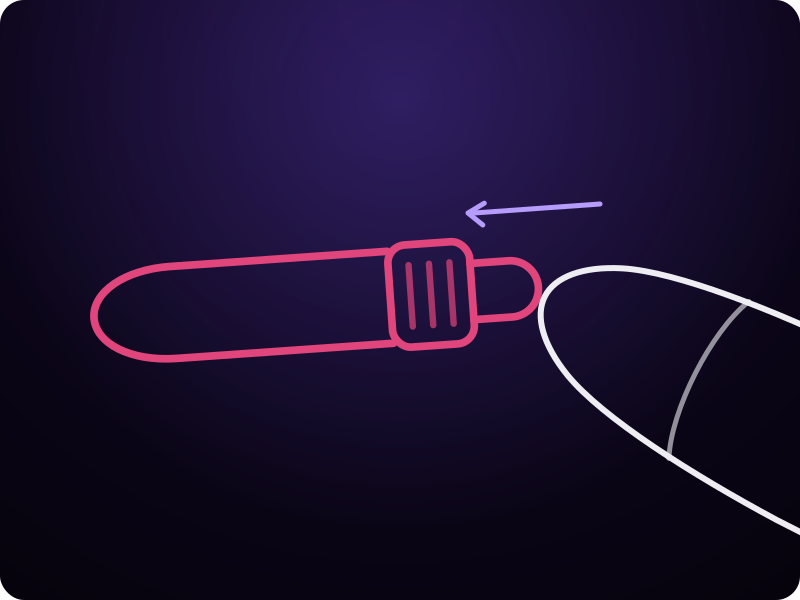
Push it in
Push the applicator's plunger fully, or push a non-applicator tampon further in with your finger, until it feels comfortable.
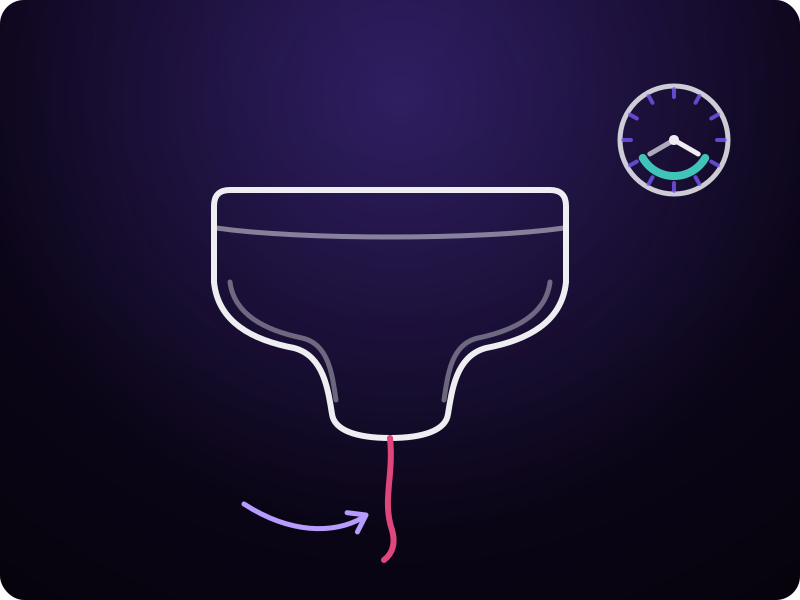
Check the string sits outside
The string should hang outside your body, ready for you to remove the tampon in a few hours.
Wash your hands again
One more wash after insertion finishes the job.

Using a tampon for the first time is simple once you know the steps. Wash your hands, relax, and follow the instructions in the pack. Insert the tampon until the string sits outside your body. It gets easier with practice.
New to periods altogether? Our complete first-period guide covers the wider picture. This article is just about tampons.
Getting ready
Wash your hands, then pick an applicator or non-applicator tampon, whichever feels easier to hold. An applicator uses a cardboard or plastic tube to guide the tampon in. A non-applicator tampon goes in with a finger instead. Tampons also come in different absorbencies, so there is no single right choice while you decide. NHS guidance confirms that tampons, pads, cups and period underwear are all safe and suitable from your very first period. Still comparing your options? See our product guide.
Position, angle and insertion
Get into a comfortable position, relax, and follow the pack's instructions for the angle and depth, since these vary by brand and applicator design. Push the applicator's plunger in fully. If you are using a non-applicator tampon, push it further in with your finger until it feels comfortable. Once it is in correctly, you should not be able to feel it. If you can, or it hurts, it probably needs to go in a little further. The string always stays outside, ready for removal.
Removing and disposing of it
Relax, then pull gently and steadily on the string, and it should slide out easily. Wrap the used tampon in tissue or its own wrapper, then put it in a bin. Never flush it. Wash your hands again afterwards.
How often to change it
Change your tampon every 3 to 6 hours depending on your flow, and never leave one in for more than 8 hours. Leaving a tampon in too long raises the risk of toxic shock syndrome (TSS). This is a rare but serious infection linked to tampon use. NHS guidance is clear: wash your hands, follow the instructions, and never leave one in longer than recommended. While using a tampon, watch for a sudden fever, a sandpaper-like rash or flu-like symptoms. If any of these appear, remove the tampon and call 111 or see a GP straight away. For the full safety picture, read are tampons safe for teenagers.
You cannot lose a tampon inside your body
A tampon cannot get lost inside you. The vagina is a muscular tube that holds the tampon firmly in place. It ends at the cervix, an opening far too small for a tampon to pass through. If you cannot find the string, relax and try squatting to reach further in. If you still cannot remove it, a GP or sexual health clinic can do it for you quickly, with no judgement. NHS guidance says to do exactly that.
Does using a tampon affect virginity?
No. A tampon simply sits inside the vagina. No physical exam can use it to judge someone's sexual history. The World Health Organization and the Royal College of Obstetricians and Gynaecologists have both said so-called virginity testing has no scientific basis. The period products you use are nobody's business but your own.
If it does not go smoothly the first time
That is completely normal, since most people need a few tries before it feels easy. Tense muscles, an awkward angle or a lighter-flow day can all make insertion trickier. There is no rush. Practising on a medium-flow day often makes it easier than on a very light day. If tampons do not feel right for you yet, pads are a good option instead. NHS guidance itself points out that tampons and cups can take some getting used to. Pads are a fine place to start. See how to put on a pad for the steps.
Simply Track's first-period guide covers pads, tampons, cups and more, step by step, including this one. It sits in the app alongside period tracking and the calendar, and it is always free. Premium adds the daily Log, Insights and a doctor-ready PDF report for later. But nobody pays to learn how to use a tampon.
Sources
- NHS, Periods: https://www.nhs.uk/conditions/periods/
- NHS, Starting your periods: https://www.nhs.uk/conditions/periods/starting-periods/
- NHS, Toxic shock syndrome: https://www.nhs.uk/conditions/toxic-shock-syndrome/
- Wirral Community Health and Care NHS Foundation Trust, Periods: https://www.wchc.nhs.uk/services/lets-talk/young-people/relationships-and-sex-education-rse/periods/
- Hertfordshire and West Essex Healthier Together (NHS), Periods and menstrual cycle: https://www.hwehealthiertogether.nhs.uk/health-for-young-people/sexual-health/periods-and-menstrual-cycle
- NHS inform (NHS Scotland), Stuck or lost tampon: https://www.nhsinform.scot/healthy-living/womens-health/girls-and-young-women-puberty-to-around-25/periods-and-menstrual-health/stuck-or-lost-tampon/
- NHS Safeguarding, FGM, hymenoplasty and virginity testing: https://safeguarding-guide.nhs.uk/types-of-abuse-exploitation-and-neglect/s3-07/
Common questions
Does using a tampon hurt?
It should not. A correctly inserted tampon cannot be felt at all, according to NHS guidance. Mild awkwardness on your first try is normal, real discomfort usually means it needs to go in a little further or at a different angle, or that your muscles are tense. Relaxing and trying again almost always solves it.
What if I cannot get it in?
Take a break and try again once you feel calmer. Tense muscles are the most common reason it feels stuck. A different position, like squatting, sometimes helps. There is no shame in using a pad instead while you get used to the idea. Plenty of first-timers switch to tampons a few periods later.
What if the string breaks or I lose it?
It cannot travel further than your vagina, since your cervix is too small for it to pass through. Wash your hands, relax, and try to reach it by bearing down slightly, like going to the toilet. If you still cannot remove it, a GP or sexual health clinic will do it quickly, no questions asked.
Not medical advice
General information, not medical advice. If something about your cycle worries you, speak to a GP.

Keep track of your own cycle
Simply Track logs your period on your iPhone and Apple Watch, and its predictions sharpen the more you record. Your data stays in your own iCloud account.